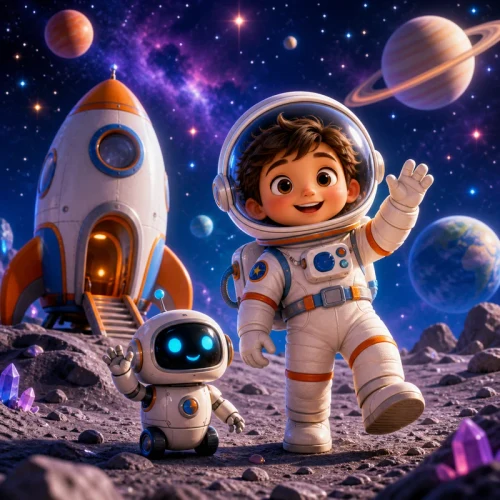
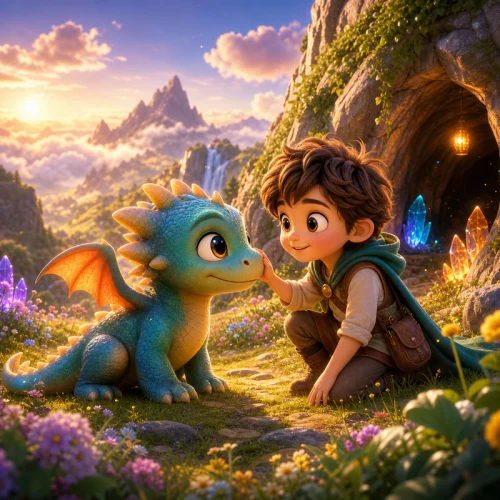
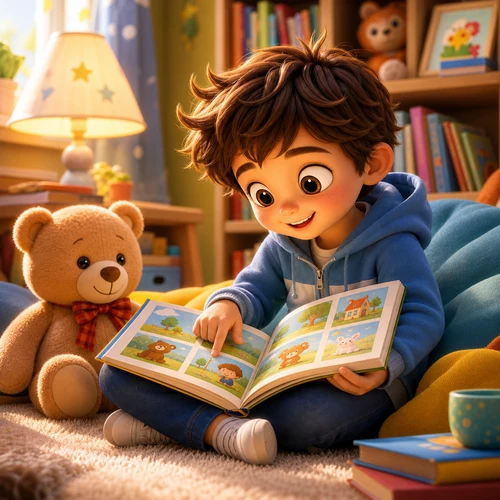
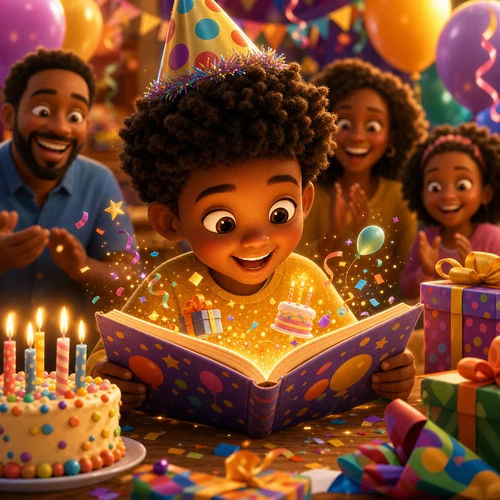
Some kids resist reading because the books they're handed are not about them. A personalized story starring your child, their face, their name, their interests, is often the book that turns "do I have to?" into "just one more page."
Free preview before you pay.
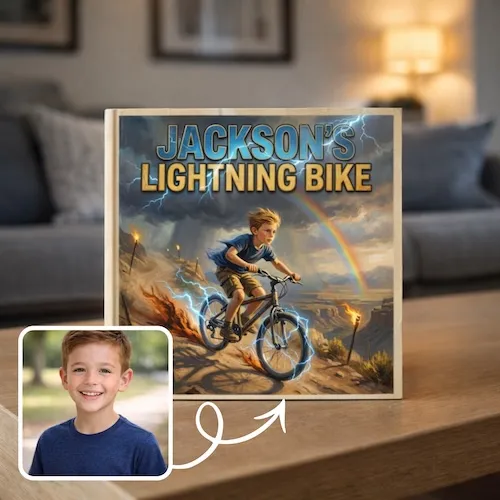
A reluctant reader is not usually a kid who cannot read. They are a kid who has not yet found a book that feels like it was written for them. Sometimes the issue is that decoding is genuinely hard and the books they're handed feel like work. Sometimes it is the opposite. The books at their level feel babyish, and the books at their interest level are too hard to read alone. Sometimes the kid just associates reading with school, homework, and being told to do it.
What does not usually work: pushing harder. More reading time, more sticker charts, more enthusiasm from the parent. These can move the needle a little, but they rarely turn around a kid who has already decided reading is not for them.
What does tend to work: shifting from "reading is a skill we are building" to "this book is yours." Ownership matters more than skill instruction at this stage. A book a kid actually wants to finish, because it is about them, their best friend, their dog, their thing, does more to build the habit than a month of obligated reading. We have heard from parents whose kids carry the personalized book around for weeks, re-reading it on their own, asking for it at bedtime, showing it to relatives. That is not a kid who hates reading. That is a kid who hated the books.
Reading engagement at this age is not about pushing through resistance. It is about giving the kid a reason to lean in. A personalized story is one of the few interventions that consistently gives that reason, and the research on personalization in early reading, while small-scale, lines up with what parents observe: kids re-read personalized stories more often, engage more deeply with the language, and treat the book like a possession.
The same page at every reading level. Pick one to see how the story reads.





Zap, zap, buzz! The tires spark. Jackson pedals fast. Up the big cliff! Whoosh goes the wind. Look at the sun! He smiles so big. "Go, bike, go!"
Blue sparks crackled around both wheels. Jackson pedaled along the high canyon rim. "Hold on tight!" he shouted. Little rocks skipped off the cliff edge. The tires hummed with electric power. A river sparkled far below him. "We did it!" Jackson cheered. He zoomed into the golden sunset.
Gravel sprayed into the abyss as Jackson skidded around the canyon ledge. Electric blue sparks snapped against the tires, tingling right through his sneakers. He gripped the handlebars, his heart racing between wild panic and pure joy. "Keep going, lightning!" he yelled over the canyon breeze. Below, the river shimmered like a ribbon of molten gold, but Jackson only looked ahead, charging directly toward the blazing sunset.
Sparks leapt from the spinning spokes, hissing as they kissed the dry red earth of the rim. Jackson leaned into the turn, suspended between the ancient stone beneath his tires and the endless canyon plunging below. The storm had left its charge in the frame, humming a wild, crackling song that vibrated in his bones. "We're almost there," he whispered, squinting into the blinding amber horizon. With each pedal stroke, the setting sun washed over him, turning dust into fire and fear into flight.

Free preview before you pay.
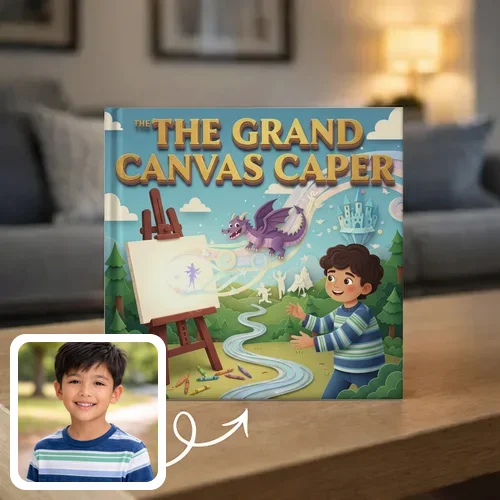
You write the prompt; we write the book. A few directions that consistently work for kids who have already decided reading is not for them:
From a single photo to a professionally printed book — about 15 minutes of your time.
Upload photos
Pick your style
Approve characters & story
Approve illustrations
Printed & shipped
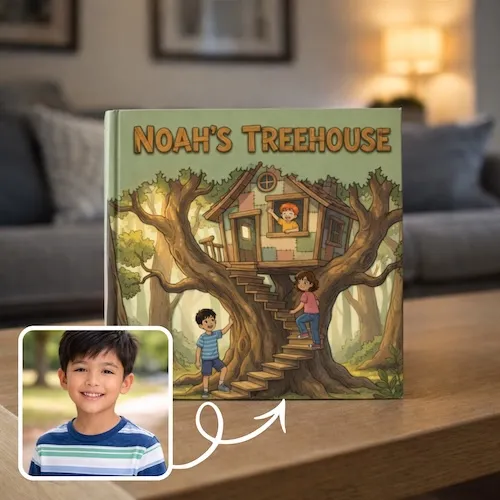
There is a small industry of products and approaches aimed at the reluctant reader. Knowing how a personalized book fits among them is worth a minute.
Graphic novels and comic books. Often the right answer. Dog Man, Bone, Big Nate, the Wings of Fire graphic novels, Babymouse. These reduce the text-to-image ratio and ease decoding pressure. Many reluctant readers turn the corner with a graphic novel before any other intervention. We are not competing with these. We are something to pair with them.
Reading-incentive programs. Sticker charts, reward apps, summer reading bingo. These can move the needle short-term but tend to wear off. They make reading feel transactional. A personalized book works differently: it shifts ownership, not motivation-via-reward.
Tutoring and reading specialists. If your kid is genuinely struggling with decoding, fluency, or comprehension, a reading specialist is more useful than any book we could make. A personalized book is for the kid who can read but won't. It is a motivation intervention, not a skill intervention. The two are complementary.
Genie in a Book in this context. A custom story written at the kid's reading level, starring them, about something they actually care about. Most useful as the book that gets them re-engaged enough to ask for the next one, which is when reading becomes a habit rather than a fight.
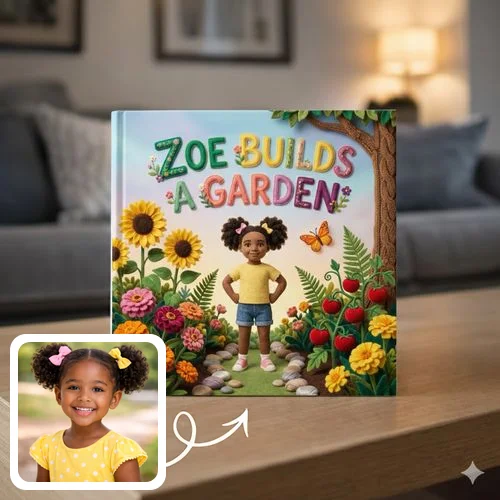
Every book is the same physical format: 32 pages total, 7.5" × 7.5" square. 13 illustrated story pages alternate with 13 pages of text. Plus a dedication page, title page, and front-and-back-matter pages.
Where the calibration matters for reluctant readers is the reading-level choice. Four levels: First Adventure (1–3), I Can Read (4–6), Young Storyteller (7–10), Keepsake Narrative (11+). For a kid who has been pushing back on reading, picking the level slightly below their official grade is often the right move. The goal is completion and re-reading, not stretch. You can also drop the level after seeing the draft if the first attempt feels too hard.
Word counts per page are calibrated to the chosen level: about 30–50 words per page at I Can Read, 50–80 at Young Storyteller. That balance of text-to-illustration is the thing that determines whether a developing reader engages or stalls. Too much text and they bounce. Too little and they don't get the practice.
You preview every page of the story before printing, have the AI rewrite any page to your instructions, regenerate any illustration with 30 included regenerations, and every book is reviewed by a real person on our team before it ships. The digital flipbook is also available the moment you approve the book, useful if you want to start with a low-stakes screen version before the printed copy arrives.
“They read it to each other at night and the illustrations rendered from their photos strike the perfect balance between whimsical character and accurate portrait, so they see themselves so fully in the story.”
Lauren E.
via Trustpilot
“Such a fun way to make bedtime stories a little more exciting! I got it for my youngest but it quickly became a hit with all 3 of my kids.”
Tugboat Boards
via Trustpilot
“I like that u can review and modify it over and over again before approving it and then submitting the print.”
Julie
via Trustpilot
Choose how their custom story comes to life.
Personalized Coloring Book
A full storybook they can color.
Same custom story and cover, printed in black & white on coloring-friendly paper.
Paperback Storybook
A full-color story to read together.
The same custom story and illustrations in a lightweight, softcover format.
Hardcover Keepsake
The keepsake families choose most.
A premium, durable hardcover made to be loved and saved for years.
You review your book before it's printed.
No printing happens until you approve every page.
The practical things parents usually want answered before trying a personalized book as a way to re-engage a kid who has decided reading is not for them.
Upload a photo and we'll put your child at the center of a story they actually want to read. The kind of book that turns "I don't want to" into "just one more page."
Engage your reluctant readerTakes about 15 minutes · Builds reading confidence · Digital flipbook included